Hi,
What a week.
Not since March 2020 have we seen the carnage in the New Zealand Government bond market as we saw in the last five days. Not good.
Emergency "Alert Levels" are back! It's now official, with the Beehive signalling what everyone in Wellington has known for ten days: The Government's back office is readying for large-scale fuel rationing.
It feels like March 2020.
Oh, and then there's former COVID Response Minister Chris Hipkins, who this week was found by the COVID-19 Royal Commission to have misused half of the "COVID Response and Recovery Fund".
Buckle in.
Royal Commission finds Chris Hipkins GUILTY of wasting $35 billion of COVID Response and Recovery Fund 🤯

The Royal Commission examining the then Government's response to COVID-19 handed down its Phase Two report, and it's now clear why Chris Hipkins ran away from public hearings and questioning!
 We'll let others ask questions around ignoring the expert advice on the health risks of mandating the vaccine for 16- and 17-year-olds (so much for 'following the science' 👀) because the economic conclusions are just as damning.
Let's focus on what the Commission found in relation to the surge in spending Hipkins, Robertson, Ardern et al said was needed as a result of the health emergency.
To quote from the Royal Commission directly so there can be no misunderstanding:
Around half of the total spending was not directly related to the pandemic.
Half is not a rounding error. Half is $35 billion.
That's $17,157 for every New Zealand household wasted – right under the nose of Chris Hipkins.
Let's call it for what it is: Chris Hipkins looked at a once-in-a-generation emergency and used it as an excuse to shovel cash out the door, grow the economy Government, and drive up the cost of living.
So where did the money go? 💸
Essentially, it's confirmed that Hipkins took the approach of throwing money at anything put in front of him.
It meant projects didn't go through the normal budget (or oversight) process – it was an 'anything goes' approach, even if nothing to do with COVID.
Here's a sample:
- $900,000 for the Dargaville racecourse.
- $27 million for the Naenae pool.
- $40 million for the Gisborne Olympic pool.
- $1.3 million for a Masterton skate park.
- $45 million for an iwi-owned Hot Springs and Spa.
- $3.45 million for the Kauri Museum.
- $8 million for the Green School.
Now some of these might have been worthy, but the issue is the lack of honesty.
While the public were told record levels of borrowing were needed for "COVID", literally half the money was used for other things!
Most damning for Hipkins is the confirmation that his Government just wasn't honest – even if you apply the low standards set by politicians, the public was gaslighted.
The economic lessons (according to the Royal Commission) 📝
If fiscal stimulus is ever needed in a future pandemic, the Royal Commission says it should be timely, temporary, and targeted.
Which is awkward given their conclusions on Chris Hipkins' time as COVID Minister: concluding his spending was late, lasting, and totally untargeted.
The Commission goes even further, backing what the Taxpayers' Union has said all along: New Zealand is now in a weaker position to weather the next large economic shock, and that there is a pressing need to reduce government debt.
And the fallout of wasteful spending continues til today: tick-tock, tick-tock goes the national debt clock...
And it won’t be Chris Hipkins paying for it. It'll be our kids and grandkids, paying higher taxes, higher interest rates, and unaffordable living costs.
Regular readers will know we don't always see eye-to-eye with our good friend Nicola Willis, but on this one, there is no fudge:

Just how ready is NZ for a fuel crisis? ⛽️
We're sorry to be pessimists, but while the media and politicians are giving assurances that New Zealand is "well positioned" and "resilient" to the situation in the Middle East, this week proved that the markets do not agree.
Let's start with the obvious: New Zealand is the very last link of a long chain of logistics to get refined fuel. We store the bulk of our reserves off-shore – which is a bit pointless when the issue is getting it here!
Asian governments – such as Japan and South Korea – are already signalling emergency measures to require fuel shipments to be diverted to their home nations.
This leaves New Zealand vulnerable to the foreign-owned shipping companies whose bulk carriers are the lifeline for keeping our engines running.
If you're a shipping executive sitting in Seoul, which is going to come first? Emergency laws requiring diversion, or a contract with a New Zealand fuel importer?
So the media reassurances about having fuel on tankers "on its way" misses the point.
And here's the elephant in the room:
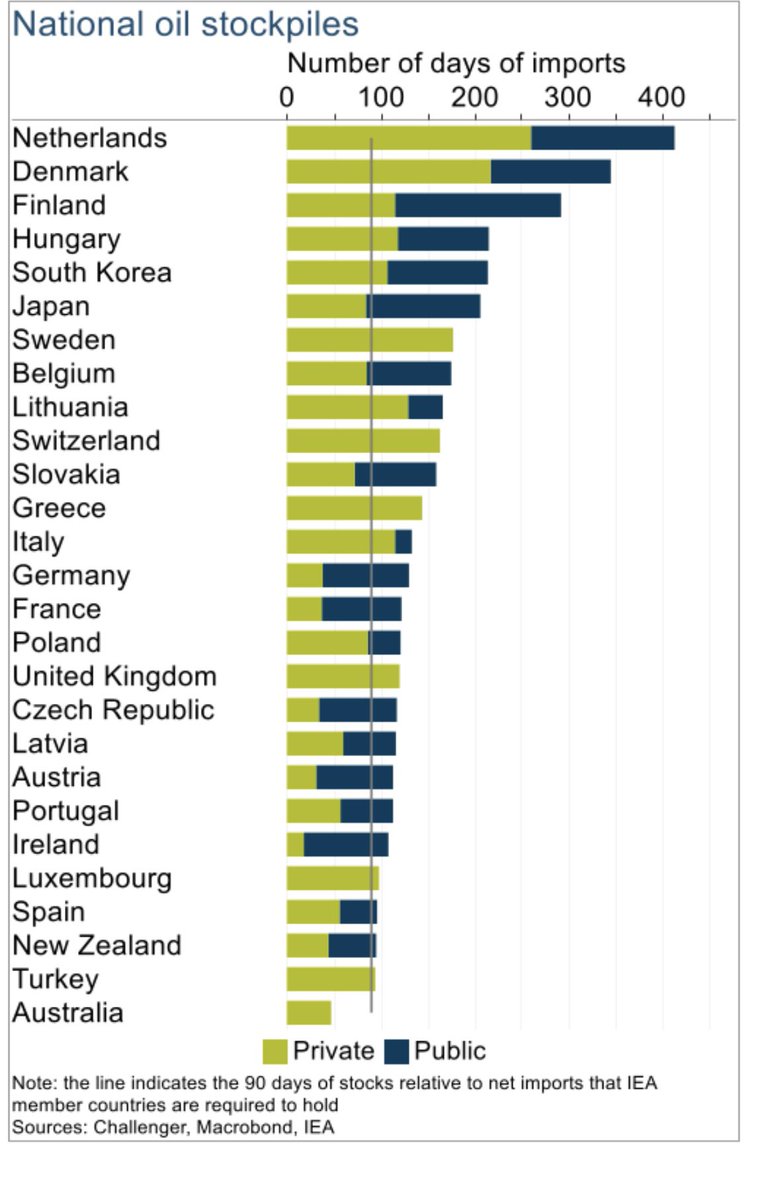 And, unlike Australia, New Zealand has no on-shore refining capacity.
On Thursday, the Australian Government relaxed its domestic fuel standards so the country's sulphur-heavy domestically refined fuel can be mixed into the domestic supply (because it is so dirty, it is usually only allowed to be exported).
Feeling "resilient" still {{recipient.first_name}}?
The resulting bond market carnage 💣

As usual, the markets were well ahead of the government and the media.
On Monday, our economic team were glued to their computers as the penny dropped on the above scenario and our bonds (along with Australia's) took an absolute hammering.
Governments borrow money by issuing bonds – essentially IOUs sold to investors such as pension funds, banks, and overseas institutions.
Investors buy these bonds and receive a fixed interest payment (the “coupon”) until the bond matures, when the government repays the principal. Once issued, the bonds are traded in a market, and their price moves up or down depending on demand. When the price falls, the yield (effective interest rate) rises.
We watch bond yields closely because they reflect what investors think about inflation, future interest rates, and the Government’s fiscal outlook. If investors expect higher inflation or more borrowing, they demand higher yields to compensate for the risk.
On Monday, New Zealand government bond yields jumped 19 basis points (0.19 percentage points).
Examples of when New Zealand bonds have moved 19 basis points in a day are vanishingly rare.
Single-day moves of that size in a 10-year sovereign bond typically only happen during acute crises – think the March 2020 COVID panic, the 2022 Liz Truss UK gilt crisis, or major central bank surprises.
As put by our economic adviser:
For a well-rated, liquid sovereign like New Zealand, a 19 bps one-day move is genuinely historic. It reflects how severely the market was repricing the entire risk profile, interest rate, and inflation path in a single session.
How does New Zealand compare? 🧐
The media would have you believe New Zealand is among the best-placed countries to cope with the emerging economic crisis, the bond market seems to be saying something different.
Of twelve selected countries, yields on New Zealand’s 10-year government bonds have shot up the most since the Iran war began.
Credit to Matthew Hooton for the table below:

Put another way, the international bond markets think there is greater inflation and currency depreciation risk to New Zealand as a result of the Iran war than in any of the other 11 countries listed.
🚨 🚨 🚨 What this means for taxpayers 🚨 🚨 🚨
Put simply, higher bond yields mean higher borrowing costs for the Government, which ultimately means higher interest payments you and I have to cover with taxes.
Treasury’s pre-Christmas Half Year Economic and Fiscal Update (HYEFU) assumed the Government could borrow for ten years at about 4.0 percent.
But now the Government bonds are trading closer to 4.7 percent.
That difference might sound small, but with Nicola Willis *still* borrowing $2.5 million every hour, it adds up very quickly.
We hate to say we told you so, but the Government's failure to get back into surplus (according to Treasury the structural deficit is larger now, than when the Government entered office!) is about to bite.
Based on current Government policy, Treasury projects around $165 billion of total bond issuance over the coming years. That's $80,882 per household of extra borrowing.
If today’s higher rates continue, the extra cost to taxpayers compared to the December HYEFU forecasts will reach $800 million to $1.1 billion per year once higher-rate debt works its way through.
Ouch.
Jacinda Ardern’s "Fees Free" leaves your taxpayer dollars in free-fall
On a lighter note, we've found another example of a weightless spending decision from the Ardern/Hipkins era.
Your humble Taxpayers' Union can reveal that since 2018, $1.2 million has been spent by the Tertiary Education Commission on tertiary degrees on skydiving.

Yes, skydiving – Fees Free.
The taxpayer subsidy to get more young people into university so New Zealand can enjoy the benefits of more doctors, engineers, nurses and teachers has extended to free-fall lessons.
Since 2018, roughly 100 'jump junkies' have passed through the hallowed halls of the New Zealand Skydiving School for taxpayer-funded diplomas in skydiving.
While you and I work late to make ends meet, it turns out our taxes are footing the bill for skydiving school.
If that doesn't get the adrenaline going...
The students have to cough up too. But not too much. Student contributions equate to just $7.50 per jump.
Quite the cushy landing!
181 years of anti-tax campaigning in New Zealand ⚡️

Finally this week, Wednesday marked 181 years since Hōne Heke cut down the flagpole at Russell.
But Hōne Heke wasn’t just protesting symbolism. He was protesting taxation.
In 1841, he was angered by the new Government’s introduction of tariffs on tea, sugar, flour, grain, spirits, tobacco, and other foreign goods — taxes that hit Māori trade in the north particularly hard.
Hōne Heke saw immediately that the Treaty he had signed was being followed by higher prices, reduced economic opportunity, and decisions being made without meaningful consent.
So he resisted not with speeches or submissions – but with the blunt tools available to him at the time.
Hōne Heke was a signatory to the Treaty of Waitangi. His protest came when the Crown failed to honour it, particularly through unjust taxation and centralised decision-making.
Heke stood up for economic dignity, self-determination, and common sense. Ideals that transcend party lines, ethnicity, and political fashion.
That’s a lineage we’re proud to be part of.
You can read Jordan’s full tribute to Hōne Heke from Waitangi Day here.
👉 Next Gen Taxpayers
I'm headed off to our weekend Generation Screwed retreat in the Wairarapa, where we’ve brought together our Campus Co-ordinators who fight for fiscal realism and challenge the status quo within New Zealand's universities.
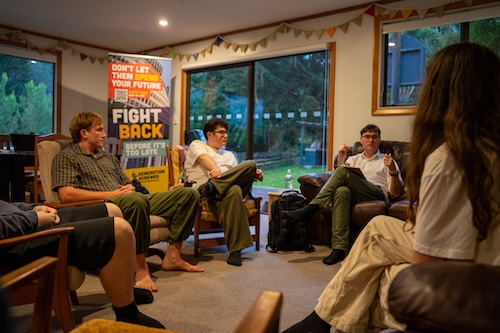
Our growing presence on campus is rebutting the left-wing dominance (i.e. indoctrination of young people!) and is attracting some of the country's best and brightest young people to the freedom cause.
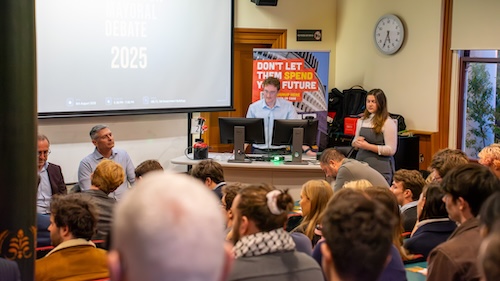
The weekend is for learning and planning for the year ahead - and I can confirm that there is no skydiving student in sight.
Thank you to all of those who make the work possible.

Enjoy your weekend.
 |
|


