Responding to reports that Waitaki District Council considered but rejected consulting ratepayers on a 9 percent rates increase option, instead only presenting options of 19-45 percent, Taxpayers’ Union spokesperson Tory Relf said:
“Waitaki ratepayers have already been smashed with a 34.8 percent rates hike over the last three years, now they are being asked to choose between increases of 19, 27, or 45 percent. While budget adjustments are unavoidable in Waitaki in order to fulfil their water delivery requirements, efficiencies could still be found elsewhere. It’s not mandated that they have to increase rates, it’s mandated that they have to invest more in their water infrastructure."
"Even so, the real scandal is that Council apparently knew there was still a lower option and chose not to put it to the public. According to unconfirmed minutes reported by the Otago Daily Times, the reason was that ‘the 9% increase might be more popular with the community but would leave less financial flexibility’. In other words: don’t ask ratepayers, because they might pick the cheaper option.”
“Minister Watts cannot keep pretending this is a problem for 2029. He has created exactly the wrong incentive. By announcing a rates cap but delaying it until 2029, he has effectively told councils to get their hikes in now. If the Minister is serious about protecting ratepayers, he should bring the cap forward and stop councils using the next three years as a last-chance spending spree."
“The Taxpayers’ Union will be writing to Minister Watts inviting him onto Taxpayer Talk to defend why ratepayers should wait until 2029 while councils like Waitaki race to lock in double-digit hikes.”
The New Zealand Taxpayers’ Union is slamming Waikato Regional Council after being blocked from speaking at Thursday's meeting on whether the council should resign from Local Government New Zealand (LGNZ).
Taxpayers’ Union Spokesman, Rhys Hurley, said:
“Waikato Regional councillors are preparing to vote on whether to keep funding LGNZ, yet they’ve refused to hear from ratepayer advocates calling for withdrawal. That’s not democracy, that’s ducking scrutiny.”
“The Rates Control Team were elected on a manifesto policy promises to leave the group - which has conveniently been scrubbed from their website. Ratepayers shouldn’t be forced to fund a lobby group that's often pushes for more spending and wanted to campaign against the proposed rates cap.”
“It’s deeply concerning that some councillors now appear more worried about protecting their own positions than delivering on commitments to reduce waste. That’s not what voters signed up for and LGNZ is not going to save these members from the upcoming local government reorganisation.”
“If councillors are confident in their decision to stay in LGNZ, they should be willing to front up and hear opposing views. Shutting down debate only strengthens the case that this membership doesn’t stack up.”
“We urge councillors to vote in the interests of ratepayers and fulfil their promise to pull out of LGNZ.”
The Taxpayers’ Union is slamming Gore District Council’s decision to hike rates by 11 percent without public consultation.
Taxpayers’ Union spokesman Josh Van Veen said:
"Gore ratepayers have already endured a staggering 46.6 percent cumulative rates rise over the past three years. Another big rates hike without even consulting the public is total affront to local democracy and underscores the urgent need for a rates cap."
"If Gore councillors want ideas of how to save money and ease the burden on ratepayers, our report 103 Ways to Save Money in Local Government lists examples of savings across all functions of councils and is on its way to councillors across the country."
The report 103 Ways to Save Money in Local Government is available here.
Amid reports that Prime Minister Christopher Luxon has given into pressure from Auckland Mayor Wayne Brown and agreed to consider a bed tax, Taxpayers’ Union spokesperson Tory Relf said:
“Who is running this government, the Prime Minister or Wayne Brown? A fortnight ago, Brown bullied Luxon into excluding Auckland stormwater from the Government’s rates cap. Now he’s been bullied into yet another tax."
“The so-called bed tax will be disastrous for many small accommodation providers while providing a slush fund that local politicians like Wayne Brown can dip into when they run out of ratepayer money."
“In his address to LGNZ in 2024, Luxon said he was committed to getting local government back to basics. He forgot to mention that Auckland is exempt.”
Responding to news that Christchurch City Council is proposing an 8 percent rates rise, Taxpayers’ Union spokesman Josh Van Veen said:
“Delaying the rates cap will cost ratepayers across the country, and Christchurch is no exception. Rates need capping now, not three years down the road.”
“Christchurch households are paying the price for the Government’s dilly-dallying. Another 8 percent rates hike is planned this year, on top of a staggering 24 percent increase over the past three years.
“With Local Government Minister Simon Watts postponing action until 2029, councils have every incentive to load costs onto ratepayers now and lock in a higher baseline. That doesn’t just mean higher rates this year; it means higher rates every year from here on out.”
The Taxpayers’ Union is calling for Prime Minister Christopher Luxon to clarify media reports that he has struck a backroom deal with Auckland Mayor Wayne Brown to exempt the Super City from the rates cap.
Taxpayers’ Union spokesperson Tory Relf said:
“Any backroom deals between the Prime Minister and the Mayor of Auckland would totally undermine what is already a watered-down policy.”
“As it stands, the Government’s so-called rates cap is more accurately described as a ban on rates freezes. And with implementation delayed until 2029, councils have another three years to jack up rates and set a high baseline for future rate hikes. All the cards are already being laid in councils’ favour.”
“As the Rates Cap Savings Dashboard shows, a two percent rates cap would have saved the average Auckland family $442 over the last three years, and that’s what the PM is signing away.”
“Exempting stormwater in Auckland would render a cap in the Super City meaningless. The Prime Minister needs to explain if he’s sabotaging his own Government’s policy, and if he intends to do the same for other councils across the country.”
The Taxpayers’ Union has today launched its Councillor Salary Increase Dashboard, exposing the staggering pay hikes many councillors and mayors across New Zealand are receiving while ratepayers struggle with a cost-of-living crisis.
According to the latest dashboard data, local councillors have accepted an average 9.81 percent annual adjustment to their pay, while mayors have seen an average jump of 8.53 percent. These increases dwarf the 2.7 percent inflation rate recorded during the 2025 financial year.
Taxpayers’ Union spokesperson Tory Relf said:
“While many Kiwis struggled to afford summer treats this year, our local councillors have had no such concerns, pocketing huge pay hikes while rates explode. It is a kick in the teeth for ratepayers who have seen their average rates bill rise by 8.39 percent in the last year.”
“These figures don’t even include the 'top-up' allowances mayors and councillors receive, such as phones, laptops, printers, mileage reimbursements for driving to work, and childcare allowances. The system is broken and designed to prevent pay from being tied to performance or outcomes.”
“Take Queenstown-Lakes District Council for example. Despite having the largest per-capita debt burden in the country and hitting ratepayers with a whopping 50.23 percent rates increase in just three years, in percentage terms its councillors are receiving the second-highest pay increase in the country this year, while the mayor's ranks ninth.”
“Councils must be given the legal option to turn down these increases so ratepayers can see who is actually serious about easing the pressure on households.”
The full Councillor Salary Increase Dashboard can be accessed at https://www.taxpayers.org.nz/pay_rise_dashboard.
The top 10 biggest increases in councillor pay are:
- Western Bay of Plenty District Council – 56.86%
- Queenstown-Lakes District Council – 33.13%
- Selwyn District Council – 31.03%
- Waimakariri District Council – 26.87%
- Porirua City Council – 26.73%
- Waipā District Council – 25.67%
- Whanganui District Council – 24.66%
- Invercargill City Council – 24.29%
- Napier City Council – 20.84%
- Tauranga City Council – 19.28%
The top 10 biggest increases in mayoral pay are:
- Mackenzie District Council – 15.02%
- Tasman District Council – 12.01%
- Wairoa District Council – 11.58%
- Central Otago District Council – 11.46%
- South Wairarapa District Council – 11.39%
- Westland District Council – 11.18%
- Hauraki District Council – 11.04%
- Marlborough District Council – 10.99%
- Queenstown-Lakes District Council – 10.83%
- Chatham Islands Council – 10.66%
Dear Supporter,
The silly season is well underway. It's the time for Christmas shopping, summer planning, last minute errands, and when Governments tend to 'take out the trash' – hoping bad news stories are buried in the Christmas rush. So while Christmas is right around the corner Santa's naughty list is growing.
This week, we learned of some sneaky (unannounced) tax changes from Wellington, that rates capping has been delayed until 2029, the bureaucrat golden goodbye bonanza continues, and a record high rates hike in the pipeline for Aucklanders.
Oh, and you might have noticed a bit of media attention the last few days on a new campaign we've not even launched yet! Some comments about that below...
So grab a cuppa. This end of week wrap up is stacked.
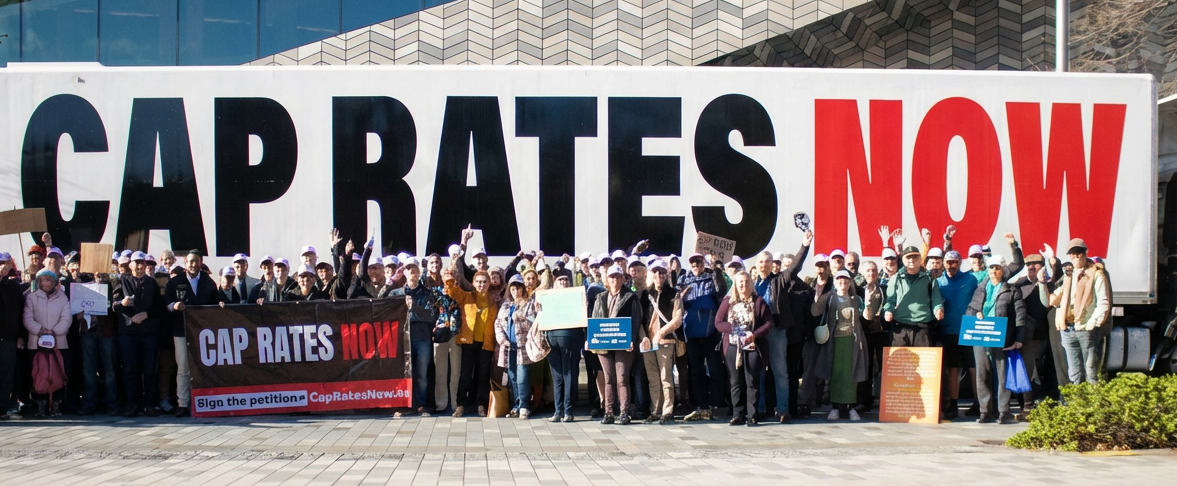
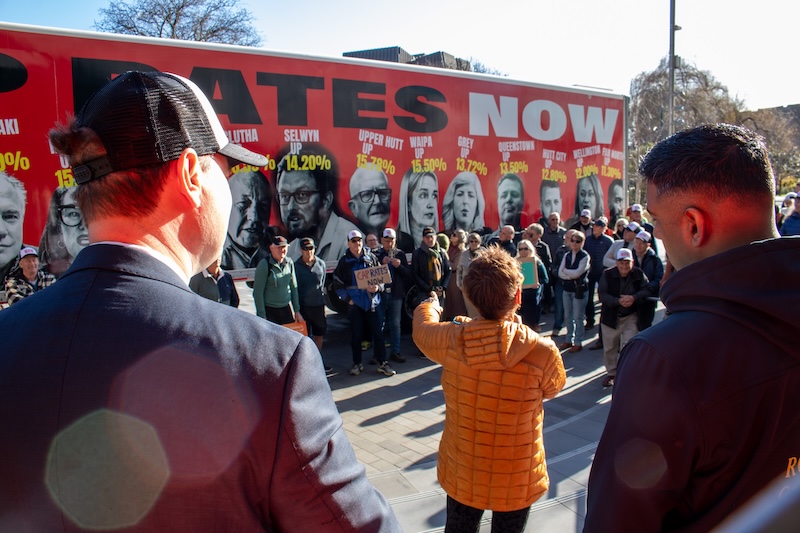
Rates Cap Now ✅ or Rates Cap Later ❌

On Monday we learned the good news is that the capping of crippling council rates is coming. The bad news is that the Government has pushed back implementation until 2029.
That means that councils now have three full years to make massive rate hikes before the cap kicks in. And does anyone have faith that they won't?
Most councils are currently working on their Long Term Plans – which are required to be done every three years to set out rates and spending parameters for the following 10 years (yes, I know how that reads).
That means the window of opportunity to force councils to live within their means (and what ratepayers can afford) is narrow. The Government’s delay is an invitation for local councils to hike everything now, bake it into the baseline, and shrug later.
Obviously, we had a lot to say on this issue, with Tory on Three News making the case for ratepayers and why we need to Cap Rates *Now*.

James was also busy. His excellent op-ed for The Post also points out that councils will rush to push rates up while they still can, because once the cap arrives, they’re locked in. I just love the last line of this:
Continue reading over on The Post's website.
Yours truly had a longer discussion with current Otago Regional Councillor (and host on The Platform) Michael Laws.
I also spoke with Duncan Garner for his Editor in Chief podcast.
TVNZ bias: even AI is noticing 📺
Strangely, we didn't hear a whisper from TVNZ's One News, despite your humble Taxpayers' Union both proposing the rates capping policy, and driving the campaign to get the Government to adopt it!
Just like One News strived to ignore ratepayers during the whole two years of coverage of the last Government's Three Waters effort, they'd rather stick to "insiders" like Local Government NZ and others who are using ratepayer money to oppose our Cap Rates Now campaign.
And we are not alone.
NEW Rates Cap Dashboard: How much have you already been fleeced? 💳🐑
As you know, we track council rates across the country closely. Earlier in the year we exposed that cumulatively, over the last three years, the average rates hike by councils was an incredible 35 percent.
So on Friday we launched the Rates Cap Dashboard – a new tool revealing what the average household in every council district would have saved if the Government's rates cap had been in place over the past three years.
James and his team found:
- Across the country, the average household would be between $670 and $864 better off right now had the proposed 2-4 percent cap been in place over the last three years.
- The average household in 21 council areas would have saved more than $1,000 each
- Queenstown-Lakes District ratepayers would have saved the most: an incredible $1,706 lost per household.
- Even in councils with the smallest numbers, a rates cap would still have left hundreds of dollars in the pockets of every local ratepayer.
👉 See what your council cost your household in lost savings here
The campaign isn't over: we've got Cabinet over the line on the Cap Rates bit, now we just need them to do it NOW.
To back the Cap Rates Now campaign and chip-in to the fighting fund, click here.
Mayor Brown’s Rates Cap Backflip 💥🛑
Wayne Brown campaigned as the guy who’d rein in Auckland Council waste. But fast forward to today, and Auckland Council’s operating spending continues to balloon right under Mr Brown's nose.
Despite the rhetoric, Wayne Brown has hiked Council spending by more than 20.5% in just three years. Cumulative inflation over the same timeframe has been seven percent.
During the election campaign just been, Brown committed to keep rates no more than 1.5 percent above inflation – which is bang on the midpoint for where the Government has set its cap! But now, just three months later, Wayne Brown has changed his tune.
Now the Mayor says a rates cap “won’t work” – announcing a 7.9 percent rates hike within an hour of the Government announcing its policy.
If Wayne Brown gets his way, next year's rates hike will be the highest ever for the Super City!
Brown is blaming the City Rail Link which he claimed will add $1 million a day to ratepayers’ costs. But our friends at the Auckland Ratepayers' Alliance checked the numbers: the actual cost is $26 million a year, or roughly equivalent to 1 percent on rates.
Not nothing, but nowhere near the eight percent figure Wayne Brown is pushing.
Brown isn’t levelling with Aucklanders — and that’s exactly why we need a legally enforceable cap.
IRD's sneaky pre-Christmas surprise 🎄⚠️
While no one was paying attention, the IRD quietly dropped one of the most destructive tax changes we’ve seen in decades.
Here’s the gist:
- Many small businesses pay owners through a running loan account during the year.
- At year-end, they clear it with dividends or salary — standard practice.
- Under the new rule, if the loan isn’t cleared within 12 months, IRD will now treat the whole loan as taxable income…
- …and the owner still has to repay the loan later using more taxable income.
Yes, taxed twice. Yes, retrospective, covering the current tax year (in fact, IRD say the law will be backdated to come into effect as of Thursday). And no, there was no press conference, no speech, no debate. Just a quiet upload to the IRD website.
Our tax experts say that these changes will have a far greater impact on New Zealand's SMEs and farmers than Labour's proposed Capital Gains Tax. No wonder the Government is mum!
And nothing says “Merry Christmas” like a backdated tax bill.
Sneaking a policy of this magnitude through without fanfare over summer is bad form. You can read our full comments here.
Submissions close on 5 February (more info here) – rest assured that the Taxpayers' Union will be back to work well before then!
Golden Handshakes: More than $837,000 in a single week (and that's just those we know about!) 🤦♀️💰
If you thought we’d hit peak golden handshake insanity with Adrian Orr's $416,120 "golden goodbye", think again. This week alone, we already know taxpayers are on the hook for:
- Andrew Coster (disgraced former head of the Social Investment Agency who was allowed to resign and therefore collect a garden leave/three-month's pay windfall) – $130,000
- Diana Sarfati (former head of the Ministry of Health)– $350,000
- Sarah Fitt (former Pharmac boss) – $357,000
We’ve also seen another resignation as the Coster fallout continues to reverberate through Wellington.
This time a former Deputy Police Commissioner now at the Civil Aviation Authority, was rewarded with a payout – and one that the CAA chief refused to even declare when asked by MPs during Parliament's scrutiny week.
That’s a) a middle finger to transparency and b) likely to push the total north of $1 million this week alone.
This is why we’re pushing for a hard cap on exit payouts, zero payouts for anyone paid more than an MP, and full transparency in public servants receiving such payouts.
Until then, the golden handshake conveyor belt rolls on.
Labour using taxpayer funded staff to make Party propaganda 📹🚫

At Labour’s conference, their social media adviser — funded by Parliamentary Service — was producing political content on the taxpayer dollar.
The rules are clear: Parliamentary staff support MPs’ official duties, not partisan content creation for the party machine.
I don’t think it’s complicated. If parties want political videos, they should use party funds, not raid the taxpayer wallet.
And yes, this all happened during Scrutiny Week. You couldn’t write it better.
Health NZ spending $3.5 million this year on “non-jobs” 🧘♂️🌀

The year might be nearly over, but everyone’s favourite Investigations Coordinator Rhys is still hard at work digging into waste across local and national government.
The total salary bill is a jaw-dropping $3,475,054.
Back of the envelope, that's an average salary of $253,654!
As is usual, Rhys has linked to all the source material on the website, so you can judge for yourself whether these Health NZ salaries are justified...

As you can see, while Health NZ only give us the salary information in bands, we can work out from the total that most of the roles are paid at the very upper end!
Meanwhile:
- Emergency departments are overflowing
- Waitlists are blowing out
- Surgical backlogs are growing
This is the problem in a nutshell: We’re funding everything except actual healthcare.
One more thing...
Finally, we’ve had a lot of good publicity for our campaign launching very soon, and now it is our turn to say what it is all about.
The campaign is about Nicola Willis becoming our best ever finance minister. No one wants her to succeed more than than Taxpayers’ Union to cut wasteful spending, balance the books, and keep out a Labour-TPM-Green high tax, high deficit, 'addicted to spending' disaster.
Our pressure campaign is about pointing out the fiscal elephants in the room and her having the incentives from voters to become our best ever finance minister and get New Zealand off the disastrous fiscal track it has been on for so long.
Watch this space...
![]() |
|
Ps. As well as the last Taxpayers' Union-Curia Poll of 2025, it's looking likely the Government's replacement to the Resource Management Act is going to be released early next week. This is likely to be the biggest (regulatory) tax relief any government has delivered under MMP. As soon as we have worked through the details, we'll get them to you. A big week ahead!
Commenting on this, Taxpayers’ Union Local Government Campaigns Manager Sam Warren said:
“There’s no doubt at all we need rates cap, but clearly we can’t afford to wait for another year of double-digit rates hikes.”
“Months and years of dysfunction have come to a crescendo. It’s a crushing decision while locals continue to suffer the heavy cost of poor decisions and planning by out-of-touch councillors.”
“$2.3 million on a light-up toilet block, hundreds of millions on cycleways and the not-so-Golden Mile, and a $563,000 bike rack outside the Mayor’s office have lead to rates soaring 47 percent in just three years.”
“There’s a good reason Tory Whanau received a ‘Lifetime Achievement in Waste’ Award at the annual Taxpayers’ Union Jonesie Awards earlier this year, and at this rate she’s on for a second one.”
“Wellington City Council cannot bring itself to prioritise ratepayers. It’s time to change the law now and force their hand.”
The Taxpayers’ Union is urging the Government to fast-track legislation to cap council rate hikes, following new figures from Stats NZ showing runaway local government spendingand the risk of even higher rates next year if action isn’t taken now.
Sam Warren, Local Government Campaigns Manager, said:
“Council spending is out of control and ratepayers are picking up the bill. This new data shows exactly why we need a rates cap now, not later.”
"Total council spending rose 7.6 percent to $18.41 billion compared to March 2024, yet employee costs have jumped 9.9 percent and interest payments soared 16.3 percent. It’s clear councils aren’t exercising financial discipline."
“More than 25,000 Kiwis have backed our petition to cap rates to inflation. The public gets it – and the Government is starting to as well.”
“The PM backed a rates cap on Newstalk ZB this morning, but the current timeline delays legislation until at least 2026, meaning councils can raise rates unchecked for another full year."
"Let's remember, the previous Local Government Minister, Simeon Brown, resolved to pass rates capping into legislation this year."
“Any later is too late. Councils are locking in bloated budgets right now. If we wait, ratepayers will keep getting hammered and blame will lie at the feet of councils and the Government.”
"The Government must act to Cap Rates Now and stop the spiral.”