Dear Supporter,
It was a huge weekend in terms of election policy - and it's also a big Taxpayers' Union-Curia Poll, hot off the press.
Two months out from the election and it looks like Opportunity’s, well, opportunity, may have passed. Both National and Labour slump - Labour plummets this month to the lowest it's been since July 2024 and National is back in the 20s, on its lowest result since March.
Meanwhile, the Greens and ACT appear to be soaking up the difference.
We’ve got all that, plus we...
- Break down ACT’s transport policy (no pun intended)
- Explain Kieran McAnulty hypocritical calls for transparency
- Release a new report breaking down how much fiscal drag is costing the average worker
- Rhys exposes some $16 million of fuel tax money being wasted on "cultural monitoring" and roadside artwork
- Expose yet another example of Local Government New Zealand bullsh*ting misleading the public on rates capping
- Cover the consultancy firm, Deloitte, being caught out charging Wellington City ratepayers millions for information they [checks notes] copied from your humble Taxpayers' Union!
- Share some good news for local democratic control on council amalgamations in Southland, and
- Listen to ACT's Paul Henry on this week's Taxpayer Talk with Peter Williams.
But first, let's round up the weekend's big election policy announcements.
National take a Labour-lite approach to housing with new demand-side subsidies 💸
Yesterday the National Party announced that a re-elected National Government will widen access to five percent deposits under the Government's First Home Loan scheme. Right now, to be eligible to only have five percent deposit for a first home (rather than the standard 20 percent) single buyers must earn $95,000 or less, while multiple buyers combined (or single buyers with dependants) must earn $150,000 or less.
You can read the announcement here, or the Nat's policy document here.
Our two cents: if there's been one area where the current Government has had real success its been in housing affordability. But Housing Minister Christopher Bishop has done that by freeing up constraints on supply, not stoking up subsidies on the demand side. The latter is what the Ardern/Hipkins Government tried under Phil Twyford - and it lead to housing affordability getting far worse...
Responding to the announcement, our Policy Analyst, Austin, said:
“National has spent years correctly arguing that New Zealand’s housing crisis is a supply problem. So why is it now trying to fix it by pumping up demand when first-home buyers are already taking their highest montlhy share of the market in more than 20 years?"
(continue reading...)
Greens’ own-goal: "CommieMart" likely to decrease increase cost of groceries 🤦♀️ 🛒
While National borrow policy from Labour, the Greens are reaching back to the Eastern Bloc with a policy to literally nationalise supermarkets!
 We're not even kidding.
Yesterday the Greens announced "a plan to break up the supermarket duopoly" by creating a publicly owned supermarket chain called CommieMart KiwiMart.
And we're not talking about opening a few shops and seeing whether customers like them.
Chlöe Swarbrick wants to force the existing supermarket companies to sell at least 120 stores and two distribution centres to the government.
The Greens told the media that the Parliamentary Library estimates buying them would cost $1.3 billion, with taxpayers then providing another $1.5 billion to get ChlöeMart operating.
That's a cost of $1,351 per household before anyone has bought a single taxpayer-subsidised lettuce.
And that $1.3b seems, well, very optimistic. Even if you get the distribution centres for free, it implies the Greens are valuing a typical supermarket at no more than $10.8 million.
But quick google would suggest, it's not nearly enough to buy nationalise a supermarket.
For example, Pak’nSave Takapuna cost [double checks] is projected to cost $100 million! Pak’nSave Albany’s operating business was worth $50–60 million in 2021 (and that did not include the land or building).
The new Pak’nSave at Warkworth cost $46 million, and New World Pt Chevalier $73 million (in fact, Chlöe $10.8million would not have even covered the $14million spent on fixtures and fittings!).
But wait, there's more!
The Greens would also give the Commerce Commission power to literally set maximum prices for the private sector competitors!
Nothing screams "we want grocery competition" like the Government legislating itself a chunk of the market at gunpoint - and fixing the price for everyone else...
As reported by Radio NZ back in March, the effects on investment, even of just breaking up the existing players (as opposed to full nationalisation) could blow up in the Government's face:

The referee wants to owns one of the teams 🤡
Yes, New Zealand has a supermarket competition problem.
But the Greens' solution is extraordinary: force private supermarkets to sell stores to the Government, use them to create a state-owned competitor, then have the Government regulate the rivals and decide whether their prices are too high.
So the referee isn't just blowing the whistle. It's confiscating the other team's players, putting on a jersey, joining the game, and keeping the power to hand out penalties.
And somehow this is supposed to encourage new supermarket chains to invest here.
As our Head of Policy James argued in The Post back in 2023, the real barriers to supermarket competition are much more mundane: foreign investment restrictions, planning rules that make it hard to build stores and distribution centres, and regulation that makes New Zealand a less attractive place to invest.
There's a radical alternative to CommieMart: make it easier for competitors to enter the market. Free up land. Remove investment barriers. Cut the regulatory nonsense. Let new supermarkets actually, well, enter and compete.
New Zealand First fiddles around the edges on NZ Super reform: propose limiting to citizens 👵👴
And not to be left out, NZ First also released a substantial policy over the weekend announcing that it wants to, from 2029, limit eligibility for NZ Super to New Zealand citizens.
At present, citizens, permanent residents and people holding a residence-class visa can qualify, provided they meet the residency test.
We say this is a reasonable change — and we're very pleased to see Winston Peters finally dipping his toes into the difficult conversation about the future of Super.
But let's not pretend this fixes the problem.
The existing residency requirement is already being progressively increased from 10 to 20 years depending on when you were born, including at least five years after age 50.
So NZ First's change would appear to affect only the relatively small group of people who have lived here long enough to qualify for Super but, after all those years, have never become citizens.
In other words, this is fiddling around the edges in terms of the long term unaffordibilty of NZ Super. With an ageing population and the Super bill continuing to grow, the serious reforms politicians still need to confront are things like lifting the age of eligibility and indexing increases to inflation rather than wages.
You can read more about the policy over on NZ First's website or Winston's Peters' speech here.
Labour slumps, Opportunity falls out in latest Taxpayers’ Union-Curia Poll 📉🗳️
Our September Taxpayers’ Union–Curia Poll has landed, and it is a pretty brutal set of numbers for Labour.
National is on 29.0 percent, Labour 25.9 percent, the Greens 13.9 percent, ACT 10.5 percent, New Zealand First 8.4 percent, and Te Pāti Māori 2.0 percent.
Opportunity has fallen back below the 5 percent threshold to 4.5 percent.

On these numbers, compared to last month, National loses one seat to 39, while Labour drops one to 35. The Greens gain five to 18, and ACT also gains five to 14. New Zealand First drops one to 11, while Te Pāti Māori gains one to 3.
The big casualty is Opportunity, which goes from 8 projected seats to none at all.
On those numbers, the current Coalition would have 64 seats and could form a Government. The Opposition bloc would have 56.

You can see the full poll results and methodology here.
The headline, however, is Labour.
At 25.9 percent, Labour has fallen to its lowest result since July 2024, which is striking enough on its own. But there is another number in this poll that helps explain what may be going on.

When voters are asked which major party they trust more not to increase taxes, National now leads Labour by 10.4 points.
That is National’s strongest lead on tax since December 2024, and the timing is hard to ignore.
National has spent the last few weeks recommitting to No New Taxes; Labour, meanwhile, has been announcing billions of dollars of new spending, while insisting its capital gains tax will be its only new tax.
Voters appear to be looking at those two propositions and asking a pretty basic question:
Which one actually adds up?
Barely two months out from election day, this suggests the economic argument is sharpening fast.
Fiscal credibility is looking like one of the big battlegrounds of this election.
The poll will probably dominate the political chatter this week. But elsewhere, Labour has been making a big song and dance about transparency.
Labour discovers transparency... at Premier House 🏠👀
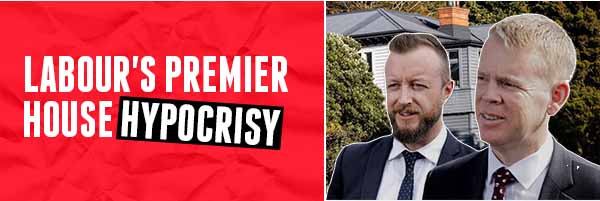
Labour’s Kieran McAnulty has been demanding more transparency over the PM's digs makeover, saying taxpayers should be able to see exactly what they are paying for and how the money is being spent.
Hear, hear!
If public money is being spent on renovating the Prime Minister’s official residence, taxpayers should be able to see the bill.
But Labour’s sudden enthusiasm for open books comes with one fairly glaring problem...
The issue is that Parliament itself still enjoys a special carve-out from the Official Information Act.
That means MPs (including Mr McAnulty) can spend millions through Parliamentary Service without taxpayers having the same right to ask for the detailed records, invoices and receipts that they can demand from government departments and councils.
Earlier this year, we revealed that MPs had spent nearly $15 million through Parliamentary Service over just 21 months.
We could only see the totals of very broad categories of spending.
That is why we have been campaigning to Open the Books – and have called on Mr McAnulty to join us.
Our Open the Books! campaign calls for Parliamentary Service to be brought within the Official Information Act, so taxpayers can see where their money goes.
No special treatment. No parliamentary loophole.
To back us, please sign the petition at www.OpenTheBooks.nz
The inflation tax is back 📈💸

When National adjusted the income tax brackets in 2024, it was sold as tax relief.
The problem is that the thresholds have been sitting still ever since, while inflation sees people's wages increase tipping them into higher tax brackets despite no real increase in purchasing power.
That's called bracket creep, fiscal drag - or, the inflation tax.
The Government already accepts the principle of indexation when it suits them. Benefits go up with inflation. Fuel excise gets adjusted. ACC levies get adjusted.
But when it comes to income tax thresholds, suddenly inflation is allowed to do the Government’s dirty work - in effect hiking everyone's taxes without ever needing a vote in the Parliament.
So this week, we're publishing a new briefing paper showing just how quickly it is biting.
Someone earning today’s median salary of $73,788 is now paying $480.14 more in income tax each year than they would if the 2024 thresholds had simply kept pace with inflation.
Read The Inflation Tax paper here.
And this is not some obscure tax-policy hobby horse.
The support cuts right across party lines too, including 74 percent of National voters, 72 percent of ACT voters, 80 percent of NZ First voters, and 58 percent of Labour voters.
National is campaigning on No New Taxes. Labour says its capital gains tax is the "only" new tax it wants (yeah, right!).
But if they mean it, both should also commit to ending the inflation tax by committing to indexing tax thresholds to inflation.
SHOCK, HORROR: ACT wants road money spent on... roads 🚗💸
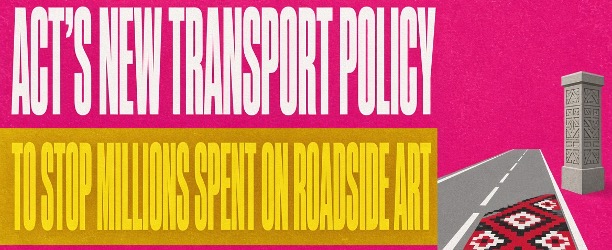
On Friday, ACT launched its Keep New Zealand Moving transport policy, promising to squeeze more infrastructure out of every dollar by stopping road-user money being spent on non-functional art and monuments.
As it happens, our Investigative Lead Rhys had been working on an investigation that landed at rather convenient timing...
Rhys has found that across just three major transport projects, at least $15.8 million has been spent on iwi and hapū resourcing, cultural monitoring, advisory roles and artwork.
The breakdown is pretty eye-watering:
- Ōtaki to North of Levin: $7.98 million on iwi and hapū resourcing, including $2.01 million on iwi adviser roles.
- Transport Rebuild East Coast: $3.54 million paid to iwi and hapū groups for cultural oversight and monitoring.
- Te Ara Tupua: $4.26 million for mana whenua sculptures and artwork.
That is nearly $16 million across just three projects.
Now, to be clear, nobody is suggesting that genuine cultural issues should simply be bulldozed over. If you are putting a motorway through a burial ground or another site of genuine cultural significance, of course there needs to be consultation and appropriate mitigation.
But that is quite different from allowing millions of dollars to disappear into standing advisory roles, cultural monitoring, reporting requirements and artwork simply because they have become baked into the way major projects are delivered.
And when New Zealand already spends comparatively heavily on infrastructure while getting comparatively poor results, every unnecessary layer matters.
Motorists pay plenty through fuel taxes, road-user charges, rates and tolls. Is it too much to expect that money to go towards roads that are safer, faster and more reliable, not millions of dollars of extras that do none of those things?
LGNZ "disinformation" case #321: $34 rates-cap claim doesn’t add up 🧮🏠
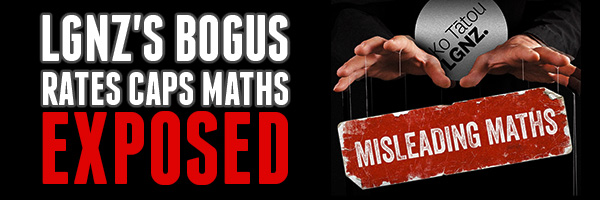
Ever since the Government announced its rates cap, Local Government New Zealand has been desperately running a disinformation campaign to anyone who will listen that the average household would save just $34 a year.
Putting aside the fact that $34 is still a saving, we were pretty sceptical.
Rates are rising by around 7 percent this year alone, and have been running well ahead of inflation for decades. The idea that holding increases to four percent would somehow save the average household only $34 did not pass the smell test.
So we asked our policy team to take a look...
We started with the Government’s Regulatory Impact Statement: the document where officials set out the expected costs, benefits and impacts of a proposed policy.
And we found the problem almost immediately.
The Government’s own modelling says the rates cap would save the average household $938 over seven years, or around $134 a year.
LGNZ had taken the smallest saving, from the very first year, and presented it as though that was the typical annual saving.
But that's not how rate hikes work. They're cumulative - the money saved under a rates cap in year one, is also saved in years 2, 3, and 4.
It's a concept the "experts" at Local Government New Zealand don't appear to understand. It's either that, or they're deliberately using dodgy maths to support their ratepayer funded lobbying against ratepayers (surely not!)...
But our Head of Policy James was not satisfied with stopping there.
He and our policy team spent the next few days pulling apart the numbers, and it turns out even the Government’s $134 figure looks extremely conservative.
The official modelling assumes rates would otherwise rise by around 4.88 percent a year.
But over the last decade, rates have actually risen by an average of 6.5 percent a year.
Run the numbers using that real-world average, and the saving under a 4 percent rates cap comes out at $2,736 over seven years, or about $391 a year!
That is more than eleven times LGNZ’s $34 claim.
We’ve published the full workings here so you (and LGNZ) can see exactly how we got there.
And unlike LGNZ, we've actually shown our maths.
Our challenge to LGNZ is pretty simple: if they still stand by the $34 figure, release the workings.
Until then, their “$34 saving” looks a lot less like analysis and a lot more like [redacted] sorry, a rather dishonest PR attempt to make the rates cap look pointless.
But LGNZ was not the only organisation having trouble with the numbers this week.
Deloitte’s AI fail doesn’t make 280 excess jobs disappear 🤖🏛️
There has been quite a bit of excitement at Wellington City Council this week over errors in Deloitte’s Future Fit Pōneke report.
The report, commissioned to find savings and efficiencies at the Council, originally identified around 330 excess jobs.
Mayor Andrew Little has understandably seized on that, and is now asking Deloitte for a discount.
Fair enough. If ratepayers are paying top-dollar consultancy fees, they should expect top-dollar work.
But the mistake is now being used by opponents of staff cuts to argue that the whole case for reducing the Council workforce has fallen apart.
It hasn’t.
Once Deloitte’s errors are corrected, the Council still has around 280 excess jobs.
So yes, the report was wrong in places. But 330 excess jobs becoming 280 excess jobs is not an argument for keeping every job.
That is why our sister group, the Wellington Ratepayers’ Alliance, is pushing back against attempts to use Deloitte’s cock-up as a get-out-of-cuts-free card.
Copying our homework: Deloitte charge Wellington City Council $435,000 for information, we gave them for free! 🤨
And there was also a rather bizarre Taxpayers’ Union cameo in all of this... 😂
It turns out some of the staffing figures Deloitte used came from the 2021 to 2023 editions of our Ratepayers’ Report - our popular (and freely available) local government league tables.
We had absolutely no idea.
But Deloitte didn't even check the dates. They were historic figures rather than our (or the Council’s) newer numbers which Deloitte should have been using for a current staffing review.
We are more than happy for Deloitte, Deloitte's AI, or anyone else, to use our work.
But if Wellington ratepayers are paying the boffins big bucks for a consultancy report, you would hope someone might check the source material was, well, current.
Deloitte deserves a kicking for the errors. They should have rung us!
But Wellington City Council does not get to turn a bad consultancy job into an excuse for no job cuts at all.
For some more encouraging local-government news, we can head south.
Southland puts local democracy first 🗳️🏘️

We might be in full election mode, but the local government reforms are still rolling on in the background.
And Southland has just got one important bit right.
The Local Government Commission is currently working through whether Southland’s four councils should be reorganised into either one Southland-wide unitary council, or two unitary councils.
The important bit is what happens at the end.
That is exactly how it should be.
Now, there is an important distinction here.
Southland’s referendum comes through the Local Government Commission process, not the Government’s new Head Start pathway for councils wanting to fast-track mergers.
The two processes are separate, but the principle should be exactly the same for both.
If councils want to merge, we say they should first prove the numbers stack up and then put the final proposal to the people expected to pay for it via binding referenda.
That is the test we set out earlier this year in our Ratepayers’ Guide to Amalgamation: publish the transition costs, set clear savings targets, have the numbers independently checked, and most importantly, let ratepayers decide.
Bigger councils are not automatically better councils. If a amalgamation proposal will really save money, cut duplication, and improve services, its backers should have nothing to fear from referenda...
Paul Henry wants to take the axe to Wellington 🎙️🪓

If you've made it this far, this week’s Taxpayer Talk is well worth a listen.
They get into ACT’s plans for smaller government and lower taxes, what Henry thinks is missing from National, and why he reckons Wellington’s bureaucracy has simply been allowed to grow and grow.
On the public service, Henry’s answer to where ACT should look for savings was pretty straightforward: everywhere.
Music to our ears.
He argues New Zealand cannot borrow or tax to reach prosperity, and says the next Government needs to shrink the bureaucracy, grow the economy, and finally confront some of the expensive issues politicians have spent years putting off.
And, being Paul Henry, there are a few less-than-subtle opinions about the state of the centre-right along the way. 😂
📺 Watch Taxpayer Talk with Peter Williams & Paul Henry 📺
One more thing 👀
As you can see, there is no shortage of work to be done and issues to fight.
And, as always, we are grateful to the tens of thousands of New Zealanders who chip in financially and make the work possible.
If you're one of them, thank you . Every little bit helps keep the lights on.
If your not a financial member or supporter please consider lending a hand to support the mission of Lower Taxes, Less Waste, and More Accountability with a confidential donation or by joining up as a member (membership starts from just $25).
 If only we could charge what Deloitte did for the research we make freely available to all... 🤭
Have a great week!
 |
|

In the Media:
NZ Herald Immigration IT scandal paints grim picture of mega-ministries - Adam Pearse
Waikato Times City leaders vow to fight for ‘bed tax' to bankroll tourism push
Bay of Plenty Times Swings and roundabouts
Newstalk ZB Friday Faceoff with Yadana Saw and Bryce Edwards
ThreeNews ThreeNews 6pm - Item 3
Aotearoa Educators Collective Politicising the Classroom: Why the Centralisation of Curriculum Sign-Off Should Worry Us All
The Platform Taxpayers Union Fires Up Over The Fake MBIE Resignation Scandal
The Platform Why Three Senior Public Servants Mean That Integrity Is Dead In NZ
Business Breakfast BNZ Business Breakfast 6.15am
Stuff.co.nz Reserve Bank hikes OCR to 2.75%
NZ Herald Election 2026: The four reasons that make this contest so gripping
The Post Mayor: ‘Large chunks’ of Wellington council Deloitte report written by AI
Newsroom Groundswell joins green groups in opposing environment reform
Whakaata Maori Pair deny filming to ‘intimidate’ New Plymouth Māori ward councillor
Newstalk ZB Mayor Andrew Little in the studio with Nick Mills to shut down Tiaki Wai rumours
The Spinoff John Campbell has been asking Chris Hipkins the same question repeatedly for several months now
The Post Please don't feed the hungry consultants
RNZ Pair deny filming to ‘intimidate' New Plymouth councillor
CountryWide Media James Ross - Is the government's $34 rates cap saving figure too low?
B2B News Ministry of Justice paid a convicted money launderer half a million in wages
Newsroom Councils alarmed at Luxon's surprise u-turn to cap user charges, as well as rates
The Spinoff National should just admit it wants to turn councils into the Department of Parks and Pipes
Newsroom PM clarifies council fees and charges won't be capped
NZ City NZ election poll watch: right still leads left, but Opportunity could deny it a majority
Waatea News #election2026: No New Taxes: National Draws a Fiscal Line in the Sand Ahead of Election 2026
Newstalk ZB The Panel: Mount Maunganui Landslide report, Auckland's second crossing and humanoid robots
The Post Labour sets out plan for higher Government spending and return of employment mandate


